What an AI video studio actually does all day
Short answer
An AI video studio works the way a small production company works: a brief becomes a shot list, generation replaces the camera and produces hundreds of takes, and most of the day goes into selecting, fixing, grading and cutting those takes into something a brand can publish. The model is the camera. The direction, the taste and the quality control are the product.
Yesterday wrapped at 19:10 with 214 takes of a matte ceramic bottle in a folder and nine of them in the selects bin. The client will see six. That ratio, roughly one keeper in twenty, is a normal day for us, and it is the single most useful thing to understand about how this work gets done.
Most people who book a call with us assume the day went differently. They picture a prompt typed into a box, a progress bar, and a finished ad with their product in it. I understand why. That is how the tools are advertised, and the demos are cut from the best take of fifty.
So here is what a day at an AI video studio actually contains, and why we run it like a shoot rather than like a software job.
How does AI video production work?
AI video production works like a compressed film shoot with the camera swapped for a model (which models, and the rest of the kit, is in our stack). A brief becomes a shot list, each shot is generated many times (those are the takes), and a person picks the few that hold up, fixes what is wrong with them, grades them so they match, and cuts them to length. Generation is the fastest part of the day and the least important one.
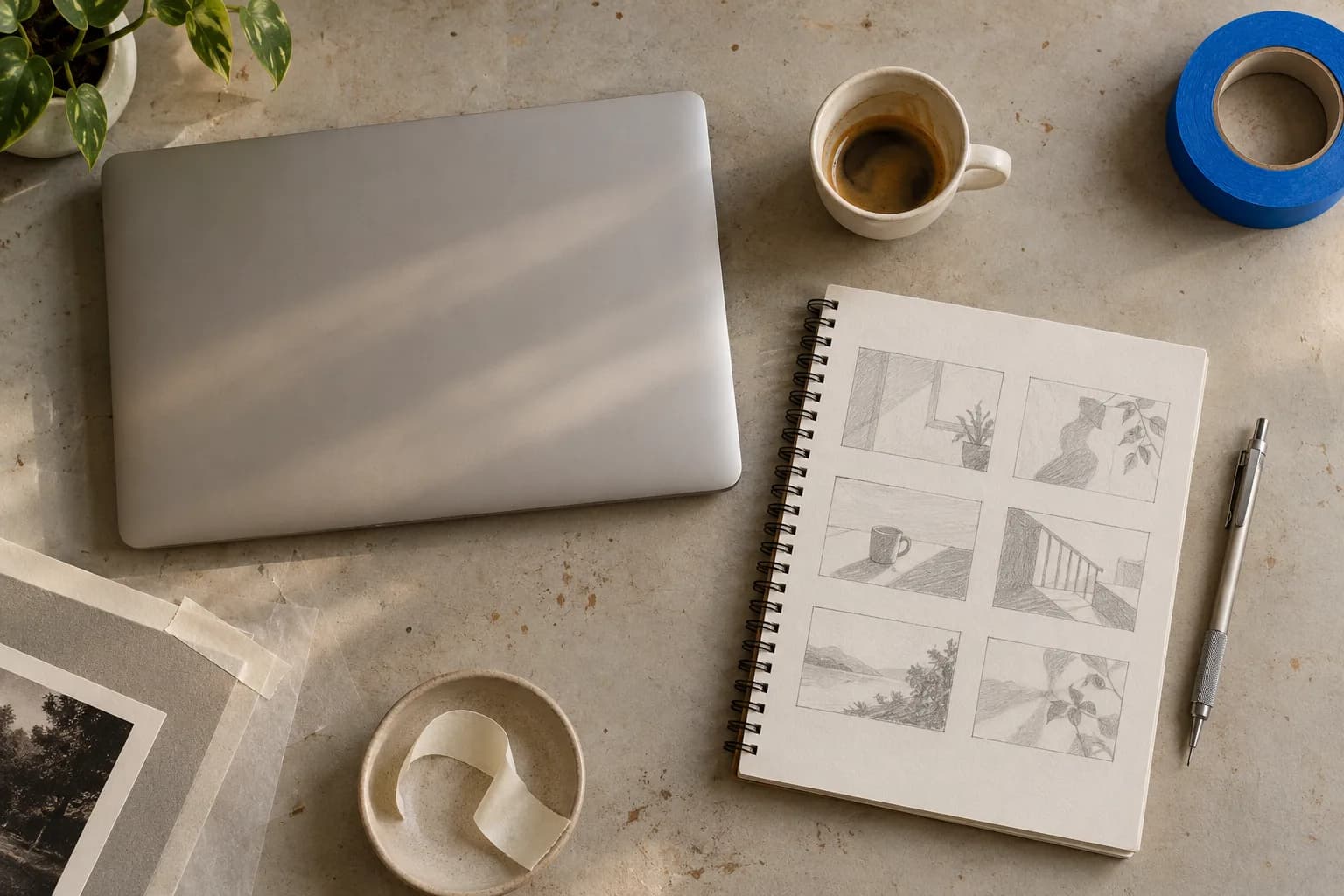
The order rarely changes. Brief. Shot list. Reference pack. Product plates if the product has to be exact. Generation in batches. Selects. Fixes. Grade. Cut. Client review. Pickups. Wrap.
If that reads like the back of a call sheet, that is the point. The vocabulary carries over because the problems carry over. You still need coverage. You still lose the afternoon to one shot that will not behave. You still find out in the cut that you are missing a reaction.
What changes is the cost of a take. On a real set a take costs crew time, and you get perhaps thirty in a day. Here a take costs a few cents and a minute of waiting, and you can get three hundred. That shifts the whole job away from capturing and towards choosing.
Is it really just pressing a button?
No. Pressing the button is somewhere around five per cent of the hours on a project. The other ninety-five are deciding what to ask for, looking at what came back, and refusing most of it. A model does not know what your product looks like from the back, what your brand would never say, or that the cap on your bottle is matte rather than gloss.
The myth survives because the one-prompt demo is technically true. You can type a sentence and get a clip. What you get is one take, with no coverage, no continuity with the shot before it, and a product that is approximately yours. For a personal project that is fine. For a paid placement it is the first draft of the first draft.
A studio produces coverage instead. For every shot on the list we generate wide, medium and close variants, several camera moves, several lighting states. Then we throw away most of it. That is not waste. On a real set you would call it shooting the scene properly.
What does a day at an AI studio look like?
A day at an AI studio is a loop of short bursts: write the next batch, send it, review the last batch while it runs, pull selects, hand fixes to whoever is on compositing, repeat. The morning is mostly asking, the afternoon is mostly looking, and the last hour is always the cut.
Here is yesterday in rough order.
- 08:30, call sheet. Which shots are due today, which are flagged red from the day before, what the client has to see by 18:00. We keep a shot list with a status column, exactly like a continuity sheet.
- 09:00, first batch. Prompts and reference frames for shots 1 to 4 go out. While they run I write the batch for 5 to 8.
- 10:00, first selects. Everything gets watched at full speed once, then frame by frame. Full speed catches rhythm problems. Frame by frame catches hands.
- 11:30, fixes queue. Anything that is nearly right goes on a list: regenerate with a tighter reference, shorten the shot to cut before the wobble, composite the real label, or drop it and cover with a cutaway.
- 14:00, second batch and pickups. Pickups are the shots we did not know we needed until the cut started telling us.
- 16:00, grade. Takes generated four hours apart do not match. Someone has to make them look like they came from one camera on one afternoon.
- 17:00, cut. The editor assembles, usually in three ratios at once, because a 9:16 and a 16:9 want different shots.
- 18:00, review link. Six takes per shot, labelled, with a note on what is still open.
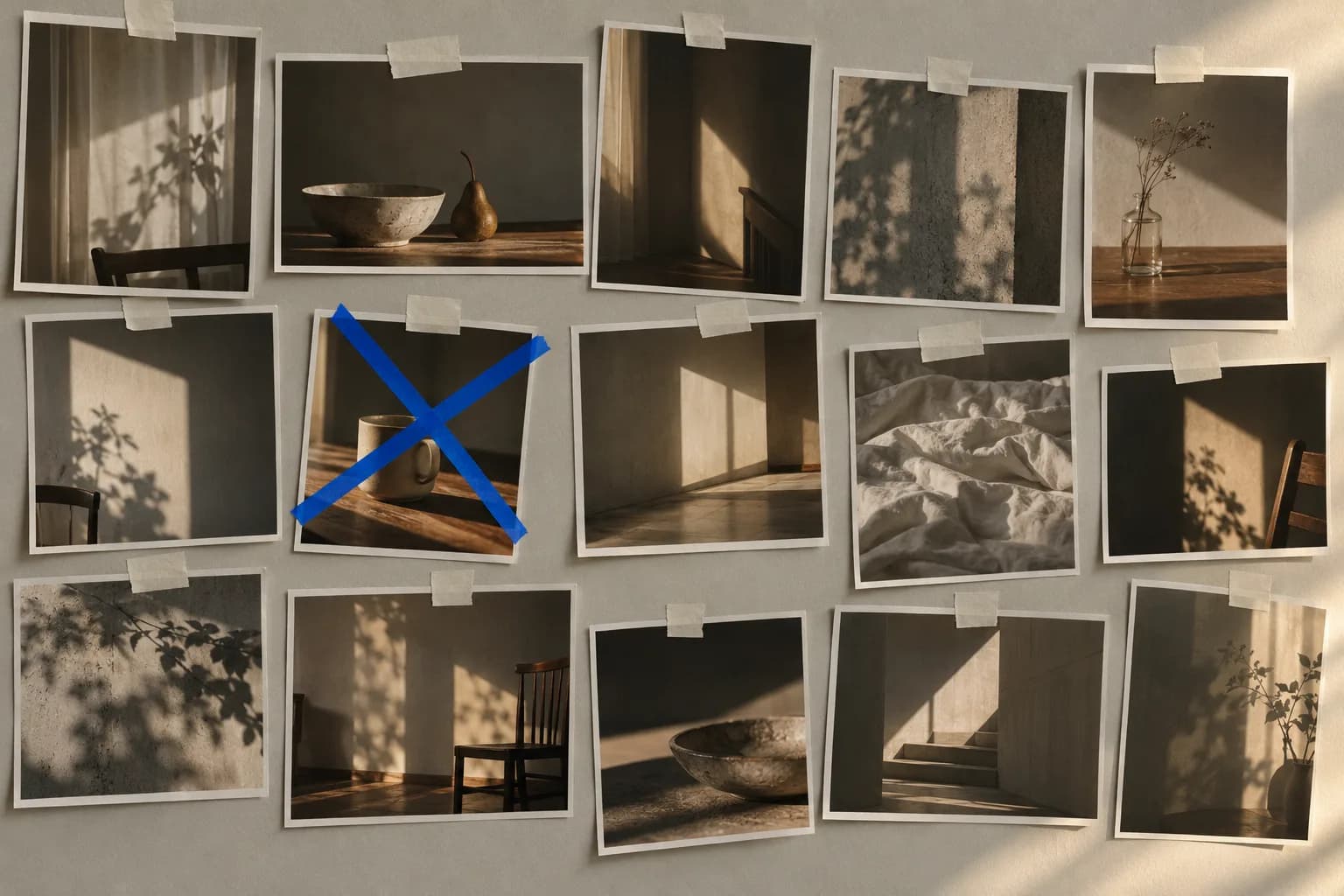
For a thirty-second spot with eight shots on the list, a day like that produces somewhere between 150 and 300 takes and leaves perhaps 20 in play. The arithmetic is the reason a studio can quote a flat day for it, and a freelancer with the same tools often cannot.
Why do you still need a director?
Because the model does not know what you mean. Direction is the act of turning "premium but approachable" into a specific lens, a specific light, a pace and a gesture, and then holding every one of three hundred takes to that standard. Without it you get the average of everything the model has seen, and that average is what most AI video looks like.
The model is the camera. Nobody ever hired a camera.
Three things a director does on an AI project that no amount of prompting replaces.
Taste before the batch. The reference pack matters more than the prompt. Which three frames we show the model, and which thirty we leave out, decide the look before a single take exists.
Refusal during selects. The hardest skill in this job is saying no to a take that is ninety per cent there. The missing ten per cent is a thumb bending backwards, a label with one letter wrong, a liquid that pours slightly uphill. A viewer will not name the problem. They will just feel that something is off and scroll on. I keep a checklist of these tells; the short version is that the eye forgives almost nothing.
Product truth. Your bottle is 180 ml, has a seam on the left, and the cap is two shades darker than the body. The model does not know that, and will cheerfully invent a better-looking bottle that is not yours. Somebody has to care, and that somebody has to be a person with the product on the desk.
What goes wrong, and what we do about it
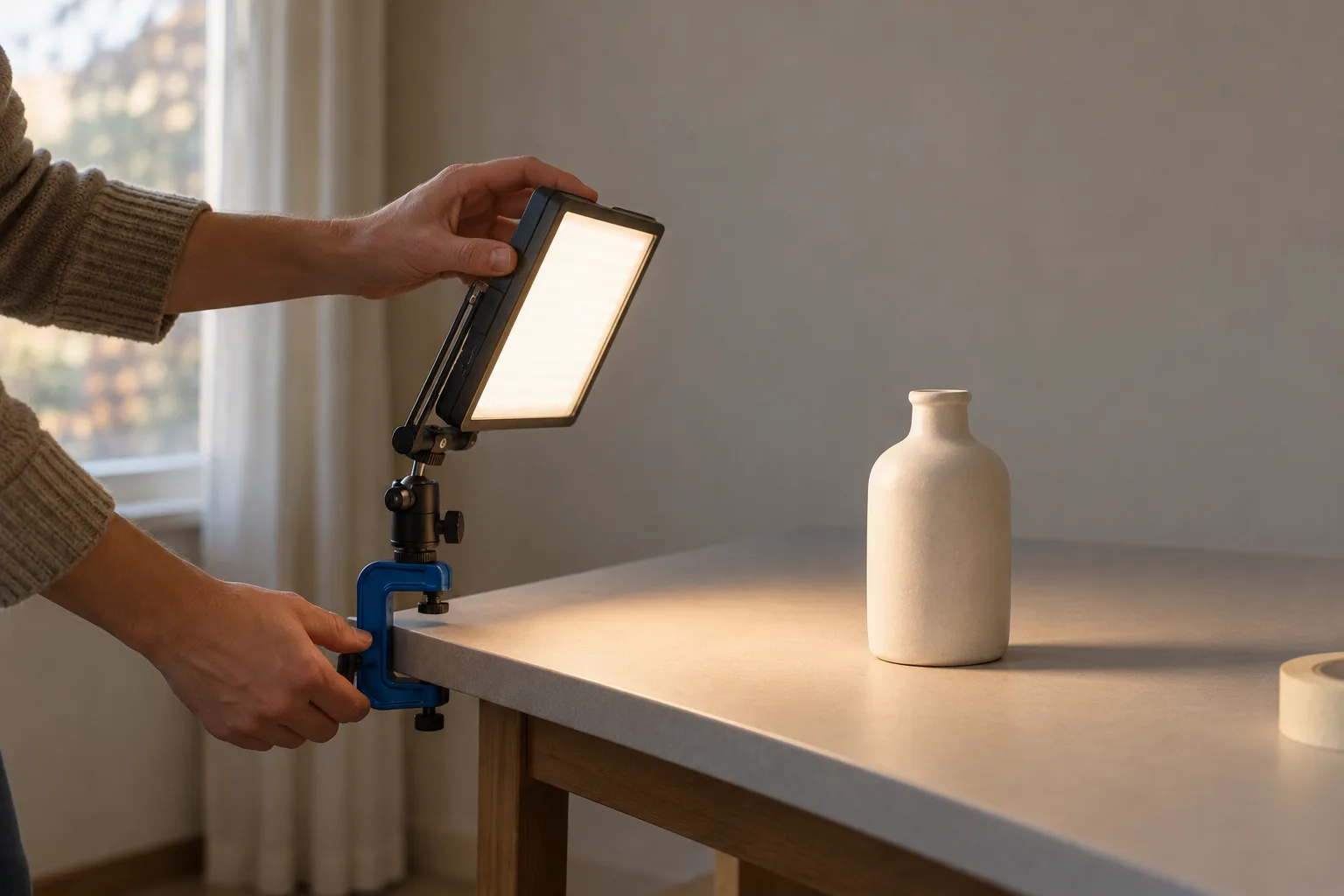
Something goes wrong on every shot. The useful question is not whether AI video has flaws but whether the studio has a named fix for each one. Ours is a short menu: regenerate, composite, plate, shorten, cutaway, grade.
- Hands and fingers. Regenerate with the hands out of frame, or shorten the shot so the cut lands before the hand turns.
- Text and labels. Never trust generated type. Composite the real artwork, or shoot a plate.
- Physics. Liquids, cloth and smoke drift. Use less of the shot. Two seconds of a pour can be perfect when five cannot.
- Continuity. Light shifts between takes. The grade earns its keep here.
- Lip sync. Still the weakest link for anything longer than a sentence. We write around it: voice over the product, not over a face, unless the face is the point.
- Cuts that are too clean. Generated footage can be eerily smooth. We leave in a little handheld, a frame of hesitation, a cut slightly early. Good editors do that with real footage anyway.
What we cannot fix is a brief that changes on day six. The model does not mind. The schedule does.
What I'd tell you on a call
If you take one thing from this, take the ratio. One keeper in twenty is normal, and the work is in the nineteen you never see. A studio that shows you a single flawless clip either got lucky or is showing you somebody else's.
The other thing is that the quality of what comes out is set before generation starts, in the brief and the reference pack. I have written down the exact brief we send, and if you want to see how these days stack up into a project, here is one laid out over nine days. The rest you can judge from the work on the front page.
Frequently asked
How long does it take to make an AI video?
A single clip takes minutes to generate. A publishable thirty-second spot in three ratios takes a studio about nine working days, because most of the time goes into selects, fixes, grading and client review rather than generation.
Do I still need a director if the AI generates the footage?
Yes. The model produces takes; someone has to decide what to ask for, reject the takes that are nearly right, keep the product true to the real one, and make three hundred takes look like one afternoon's shoot. That is direction, and it is most of the work.
Can an AI studio show my actual product accurately?
Mostly, with help. Fine detail such as labels, type and exact proportions is composited from photographs of the real product rather than generated. Expect a studio to ask for two units of the product and the label artwork as a file.
Got a product and a deadline? Fifteen minutes is usually enough to tell you whether AI is the right way to make it, and what it would cost.
Book a callor look at the work