From brief to delivery in nine days: anatomy of a project
Short answer
A typical AI video project at a studio like ours takes nine working days from brief to delivered files: one day to brief and plan, two to lock the look, three to generate and select, two to cut and revise, one to version and deliver. The client sees something every day and makes four real decisions. The schedule slips only when those decisions do.
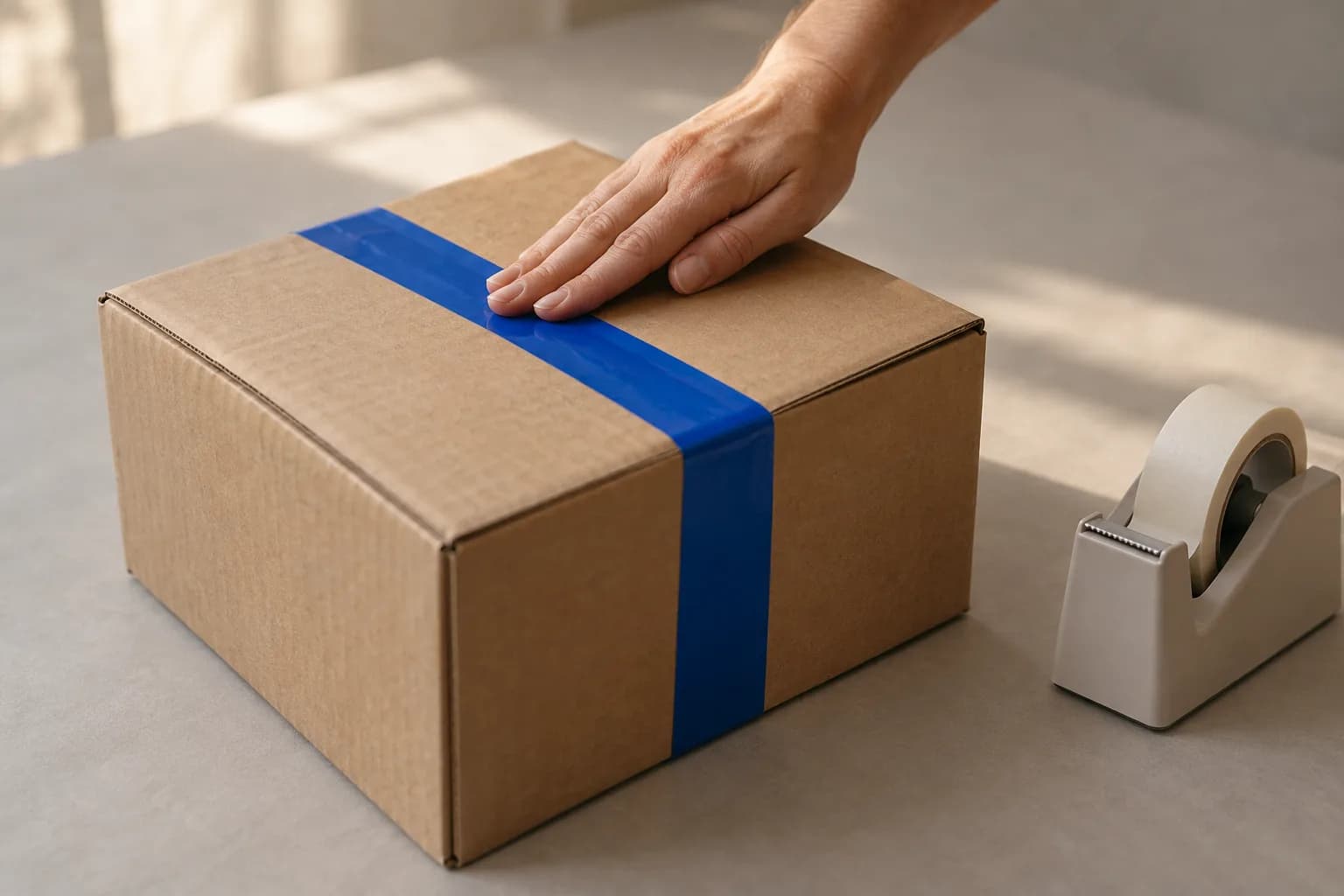
The parcel arrives on a Monday. Inside is a consumer product, call it a skincare bottle with a pump, because that is the kind of thing it usually is. Two units, one for the desk and one for the plate shoot. The brief came by email on Friday. The client wants three formats: a 9:16 UGC-style clip for Reels and TikTok, a 1:1 product film for the feed, and a 16:9 hero for the website and pre-roll.
Nine working days later, on the Thursday of the following week, the files are in their drive. This is what happened in between, and what the client had to look at and decide each day. No client is named; the project is a composite of many like it. The shape, though, is the shape.
How long does AI video production take?
A typical AI video project takes nine working days from brief to delivered files for a consumer product in three formats. Roughly: one day to brief and plan, two to lock the look, three to generate and select, two to cut and revise, one to version and deliver. It can be done in five if the client is in the room, and it stretches past fifteen when approvals drift.
Nine days is not the speed limit of the tools. The generation itself is hours. Nine days is the speed limit of human attention: how fast a brand can look at something, agree internally and answer. That is why every day below has a "what the client sees" line.
What happens on each of the nine days?
Each day has a job, an output the client can open, and usually a decision. Here they are in order.
Day 1 (Monday): brief read-back and kick-off
We read the brief back to the client on a fifteen-minute call, to hear whether the project in our heads matches the one in theirs. The same three questions come up almost every time: which format is the hero, whether the pump has to be shown working, and who has the last word when two people disagree.
The parcel is opened. The product is measured, photographed under flat light, and its truths written down: 150 ml, frosted glass, matte white pump, a grey label with one line of small type that will always be composited, never generated.
What the client sees: a one-page project sheet with the shot list skeleton, the formats, the review dates and the approver's name. Decision: confirm the hero format and the approver.
Day 2 (Tuesday): shot list, reference pack, product plates
The shot list grows to about twelve shots across the three formats: a handheld opener, product-in-use moments, two hero product shots, a texture close-up, a pack shot, cutaways. Each shot gets a ratio note, because a 9:16 opener and a 16:9 opener are different shots, not the same shot cropped.
The reference pack is assembled with a reason on each frame. The product goes under proper light for plates: front, three-quarter, top, pump mid-press, label flat. Those plates are what make the generated product look like the real one later.
What the client sees: the shot list and the reference pack. Decision: none required. We ask for objections by end of day.
Day 3 (Wednesday): look frames
Look frames are stills, one per key shot, showing light, palette, setting and how the product sits in frame. We send six to eight. This is the cheapest moment in the whole project to change direction. A look frame takes an hour to redo. A cut takes a day.
What the client sees: six to eight stills, labelled by shot. Decision: approve the look, or one round of notes such as "warmer" or "the hand looks older than our customer". Decision one of four, and the one that sets the schedule.
Day 4 (Thursday): generation, first pass
With the look approved, every shot on the list gets coverage: wide, medium, close, two or three camera moves, both lighting states if the brief allows. By the end of the day there are a few hundred takes in the bin and the first selects pass has started.
Nothing goes to the client today. Showing raw takes teaches people to see the failures, and then they see them everywhere. We show selects.
What the client sees: a one-line status note. Decision: none.
Day 5 (Friday): selects and fixes
The whole day is looking. Full speed first, then frame by frame. Takes are sorted into keep, fix and kill. Fixes go to a short menu: regenerate with a tighter reference, composite the real label, shorten to cut before the wobble, or replace with a cutaway.
What the client sees: a contact sheet of selects, two or three per shot. Optional. Decision: none, though a quick "that one, not that one" saves time on Monday.
Day 6 (Monday): first cut
The 9:16 hero goes out as a first cut with temp music and a placeholder voice if there is one. The 1:1 and 16:9 follow as assemblies, because they inherit decisions from the hero and there is no point polishing them before the hero is agreed.
What the client sees: a review link with the hero cut and the two assemblies. This is where the real notes live: pace, shot order, whether the pump moment is long enough. Decision: decision two of four. One consolidated round of notes, from one person, by end of the next day.
Day 7 (Tuesday): revisions, pickups, grade
Notes come in. Some are edits, which take minutes. Some are pickups, shots nobody knew they needed until the cut asked for them, which take a couple of hours each.
Then the grade. Takes generated across two days do not match, and someone makes them look like one camera, one afternoon. The real label plates go in now, and the product colour is checked against the physical unit on the desk.
What the client sees: nothing, or a short clip of a fixed shot if a note was contentious. Decision: none.
Day 8 (Wednesday): second cut and versions
All three formats go out as proper cuts: graded, with licensed music, captions where the brief asked for them, the legal line placed, the final voice if there is one, and any disclosure label the platform requires.
What the client sees: three cuts in their final ratios, close to delivery quality. Decision: decision three of four. Approve, or one final round of small notes. Small means timing, type, a frame here or there. A new shot at this stage adds a day.
Day 9 (Thursday): final approval and delivery
Final notes go in during the morning, exports in the afternoon: each format at platform spec, clean and captioned versions, a few stills from the hero for thumbnails. Everything named so that nobody has to open a file to know what it is.
The folder also carries the music licence, the shot list as shot, and a note on what was composited versus generated, in case anyone ever asks.
What the client sees: the delivery folder. Decision: decision four of four. Sign-off.
What does the client have to decide, and when?
The client makes four real decisions in nine days: the look on day three, the first cut on day six, the second cut on day eight, and sign-off on day nine. Everything else is information. The schedule holds exactly as well as those four dates do.
| Day | Studio | What the client sees | Decision |
|---|---|---|---|
| 1 Mon | Brief read-back, product measured, truths written down | Project sheet, shot list skeleton | Hero format, approver |
| 2 Tue | Shot list, reference pack, product plates | Shot list, references | Objections only |
| 3 Wed | Look frames | 6 to 8 stills | Approve the look |
| 4 Thu | Generation, coverage of every shot | Status line | None |
| 5 Fri | Selects, fixes, rough assembly | Contact sheet (optional) | None |
| 6 Mon | First cut of the hero, assemblies of the others | Review link | Notes on the first cut |
| 7 Tue | Revisions, pickups, grade, label composites | Nothing, or one fixed shot | None |
| 8 Wed | Second cut, all formats, music, captions | Three cuts | Final small notes |
| 9 Thu | Final fixes, exports, delivery folder | Delivery folder | Sign-off |
Generation takes hours. Nine days is how long it takes a brand to look at something and agree.
What slows a nine-day project down?
A nine-day project slows down for three reasons, in order of frequency: a review that slips, notes from more than one person, and a new idea after the first cut. None of them are about the tools. Each is a schedule decision disguised as a creative one.
- A review that slips. Day-three notes arriving on day five push everything two days. We say this on the kick-off call and in the project sheet, and it still happens.
- Notes from a committee. Three people's notes contradict each other and the studio ends up arbitrating. One approver, one consolidated round.
- A new idea in the cut. "Could we also show it in the kitchen?" is a shot, not a note. It costs a pickup day. Worth it sometimes. Free never.
- Legal arriving late. A claim that has to come out on day eight rewrites the voice and often a shot. Get legal to read the brief on day one.
What makes it faster is the mirror image: one approver, on a call at 17:00 each day, legal already signed off. Our fastest was five days, with a client who answered within the hour every time. That is rare, and tiring for everyone.
What does nine days cost?
Nine days like these are what a mid-range quote buys at a studio like ours: one product, three formats, two rounds of notes, licensed music, platform-spec exports. What moves the price is the number of formats and rounds, whether a voice or face is involved, and how much of the product has to be composited. I have broken that down, with ranges, in what AI video costs in 2026.
What I'd tell you on a call
Nine days is a planning number, not a promise. It holds when the brief is complete on day one and the four decisions land on their days. The brief is the part you control entirely, and the exact one we send is here. The days in between are described in more detail in what an AI video studio actually does all day, and the results of a few of them are in the work on the front page.
If you are reading this with a parcel already on its way to someone, the single most useful thing you can do today is name the approver.
Frequently asked
How long does an AI video project take from brief to delivery?
Nine working days is typical for a single consumer product in three formats. Five is possible with a client who answers the same day. Fifteen or more happens when reviews slip, notes come from several people, or a new shot is requested after the first cut.
How many rounds of revisions are included in nine days?
Two. One round of consolidated notes on the first cut, on day six, and one round of small notes on the second cut, on day eight. A new shot requested after the first cut is a pickup rather than a note, and usually adds a day.
What do I need to have ready on day one?
A complete one-page brief, two units of the product, the label artwork as a file, your references with a reason for each, and the name of one approver. Legal sign-off on any claims before day one saves a day later on.
Got a product and a deadline? Fifteen minutes is usually enough to tell you whether AI is the right way to make it, and what it would cost.
Book a callor look at the work