
One product, one face, one light: consistency across 40 shots
Short answer
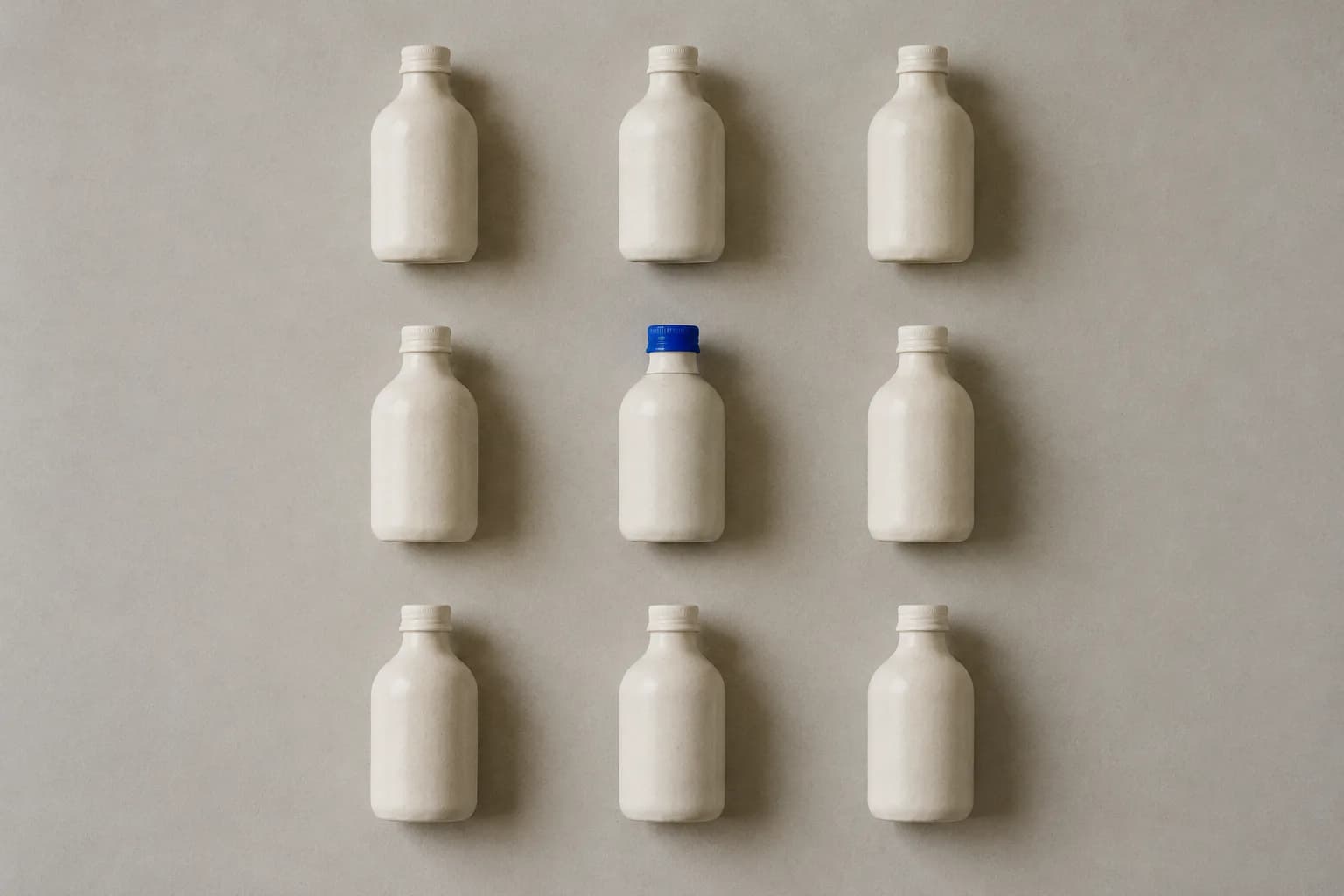
Consistency across many AI shots is a process, not a setting. You lock a reference pack for product, face and light before generating anything, reuse seeds and references rather than prompting from scratch, composite a photographed product plate into shots where the geometry matters, and judge every take on a grid next to its neighbours instead of one at a time. The product's exact shape and any text on it still break most often, which is why the plate exists.
A client once sent back a set of forty product stills with a single note: "the cap". Thirty-nine were fine. In one, the cap was a couple of millimetres taller and had a shoulder the real one does not have. They saw it instantly, because it was their bottle and they had held it ten thousand times.
That is the standard. Not "does it look like a bottle" but "does it look like our bottle, in all forty, to the person who designed it". Same for a face, same for the light. The question I get asked most after price is how we hold that line across a whole set, so here is the process, start to finish.
Why is consistency so hard for AI images?
Each generation is a fresh guess. The model has no memory of the bottle it drew a minute ago, so unless you pin it down with references, a locked description and a repeated seed, every shot is a slightly different object under slightly different light. Forty shots means forty chances to drift.
Drift comes in four flavours and they compound. The product's geometry wanders: cap height, shoulder, the radius of a corner. The face's identity wanders: cheekbones, hairline, the distance between the eyes. The light wanders: key direction, colour temperature, softness. And the lens wanders: a shot that reads as 35 mm next to one that reads as 85 mm, which the eye registers as "a different photographer".
None of these is fixed by a better prompt alone. They are fixed by treating the set like a shoot, where the product is on a mark, the light is metered and the call sheet says what the lens is.
What is a reference pack, and why lock it before generating anything?
A reference pack is the set of images we agree on before a single shot is generated: the real product from five angles under neutral light, the face from three angles with a neutral expression, and one lighting plate that defines the look. Nothing moves until the pack is signed off, because changing a reference halfway means regenerating everything that came before it.
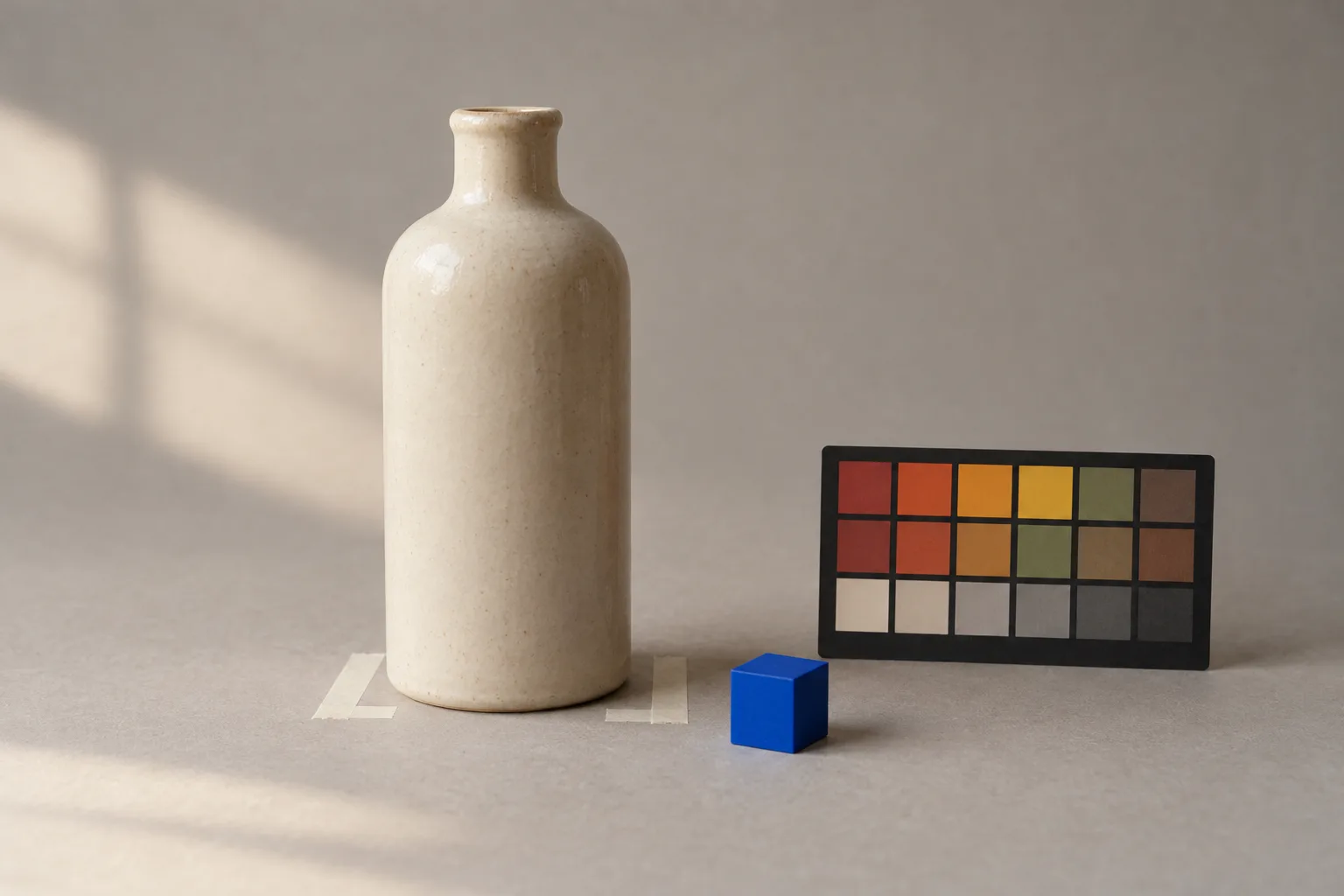
Product references. We photograph the real object. Five angles, a grey card and a colour checker in frame, the dimensions written on tape. If the client only has renders we use them, but a photograph is better because it carries the small truths, the way the frosting catches light, the exact matte of the cap, that a render smooths out.
Face references. Three angles, neutral light, no expression, approved in writing. If the face is a real person, that approval is also a release. If the face is synthetic, we generate until the client picks one and that one becomes the only one; from then on we never describe the face again, we only reference it.
The lighting plate. One image that says: the key is here, at this height, this warm, this soft. Every subsequent prompt and reference inherits those three numbers. The plate is also what the grade matches to at the end.
A pack takes most of a day to build and approve. It feels slow on day one and saves the week.
How do you keep the product identical across shots?
Three methods, in order of reliability: composite a photographed plate of the real product into the generated scene; generate from the product reference with a fixed seed and a locked description; or generate freely and fix the worst by hand. For anything with a logo, a label or a specific silhouette, we plate it.
Plating means the bottle in the finished image is a photograph. The scene, the hand, the kitchen are generated; the product is shot once under the pack's lighting and composited in, with its shadow and reflection rebuilt to match. It is the only method where I will promise the client the cap is right.
Reference generation feeds the model the product images and holds the description word for word across the set. It gets the silhouette right most of the time and the small details some of the time. Good for shots where the product is small in frame or partly hidden by a hand.
Hand fixes are what is left: a cap reshaped, a label replaced, a highlight moved. Fine for one or two shots. If you are doing it on ten, the pack was wrong.
On a typical forty-shot set, roughly a third of the shots are plated, a third are reference-generated and pass as they are, and a third need a hand fix before they match their neighbours.
Every file is named by what it is, not when it was made: product, scene, light, take. bottle_kitchen_key45_t07 tells anyone on the team what they are looking at without opening it, and it means the QC grid sorts itself.
How do you keep a face the same?
Face consistency uses the same reference-and-seed discipline plus restraint. Fewer angles, fewer expressions, a locked wardrobe. The more you ask a face to do, the more it drifts, so we write the shot list to ask less of it.
Identity holds best within about thirty degrees of the reference angles and starts to slide past that, particularly toward profile. Hair length, earrings, collars and glasses are the first things to change, so they go in the description verbatim and in the reference pack visibly. Expressions beyond "neutral", "small smile" and "concentrating on the product" cost consistency, and we tell clients that up front.
For video, the same face has to survive motion, which is harder again. We keep on-camera time short and cut to the product often, which is also what makes the ad watchable. The tells to look for when a face has drifted are in the uncanny checklist.
How do you lock the light?
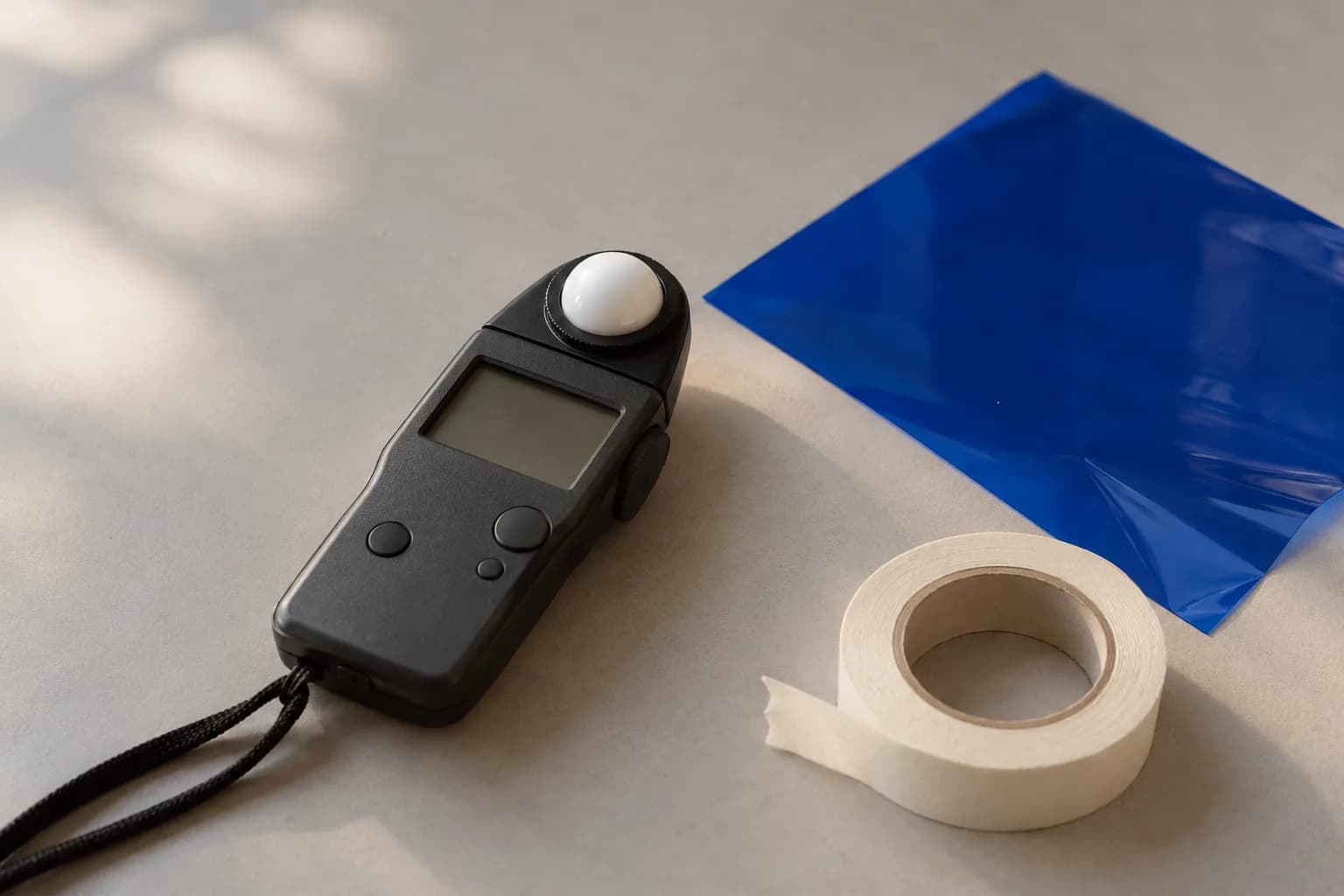
We fix three numbers before the first take and never change them: key direction, colour temperature and lens length. Every prompt carries the same three, every reference was shot under the same three, and the grade at the end pulls whatever still drifted back toward the lighting plate.
Key direction is written as a clock position and a height: "key at 10 o'clock, 45 degrees up". Colour temperature as a number, usually one for the key and one for the fill if a window is involved. Lens as a focal length, because a set that mixes wide and long reads as two photographers even if nothing else changes.
The grade is the safety net, not the plan. If the light drifted in generation, the grade can pull warmth and contrast back toward the plate; it cannot move a shadow from the left side of the bottle to the right. That is why the three numbers are locked first.
Consistency is not something the model gives you. It is something you take from it, one locked variable at a time.
What is a QC grid?
A QC grid is every selected take laid out as thumbnails on one screen, product at the same scale, so the eye compares neighbours instead of relying on memory. A bottle that is four percent too tall is invisible on its own and obvious next to eight siblings.
We check in a fixed order: silhouette, cap, label, colour, shadow direction, reflection, background. A take that fails silhouette or cap goes back to plating. A take that fails shadow direction goes to the grade or the bin. A take that fails on background alone is usually fine, because the background is supposed to change.
The grid also catches the slow drift that one-at-a-time review never does. Take seven looks like take six, take twelve looks like take eleven, and take twelve does not look like take one. On a grid you see it in a second.
What still breaks?
Text on labels, transparent and reflective products, hands gripping the product, the same face across video rather than stills, and anything shot from an extreme angle. Each of those we solve with a plate or by not asking for the shot, and I would rather say so in the brief than in the delivery.
Glass and clear liquid are the worst. The refraction through a bottle of serum is doing physics the model only approximates, so a clear bottle is plated or photographed outright. Labels with more than a word or two are composited every time. Hands holding the product are checked frame by frame, because the grip is where fingers merge.
Expect waste. From a forty-shot set we usually generate a hundred and fifty to two hundred takes and throw most of them away before the client sees anything. That ratio is the cost of consistency, and it is in the quote.
What I'd tell you on a call
Bring the product, or good photographs of it, and tell me where the set will run. From that I can say which shots will be plated, which can be generated and which I would cut from the list. That conversation is where most of the consistency comes from; the tools only execute it.
For the failure modes this process exists to catch, read the uncanny checklist. For the format where face consistency matters most, read when AI UGC sells and when it looks cheap. If the real question is whether to generate the product at all, AI product photography vs a real shoot has the numbers. The sets on the front page all went through the grid.
Frequently asked
Can AI generate the exact same product in every image?
Not reliably from prompts alone. Silhouette and colour hold most of the time with references and a fixed seed; cap shapes, labels and logos drift. For anything with text or a precise shape, the dependable method is to photograph the real product once and composite it into the generated scenes.
How do you keep the same AI-generated person across many shots?
Lock a reference set of the face from three angles, reuse it and the same seed for every shot, hold wardrobe and hair in the description word for word, and keep the shot list within about thirty degrees of the reference angles. Ask the face to do less, and it stays the same person for longer.
What is a product plate?
A photograph of the real product shot under the same lighting the generated scene will use, which is then composited into the generated image with its shadow and reflection rebuilt. It is slower than generating the product, and it is the only method where the cap height and label are guaranteed correct.
How many takes does a 40-shot consistent set need?
In our experience somewhere between a hundred and fifty and two hundred generated takes, plus reference photography and a day to build the reference pack. Most of the waste is takes that look fine alone and wrong next to their neighbours on the QC grid.
Got a product and a deadline? Fifteen minutes is usually enough to tell you whether AI is the right way to make it, and what it would cost.
Book a callor look at the work