What AI video costs in 2026, from a studio that quotes it weekly

Short answer
In 2026 a studio-made AI UGC pack typically costs €2,500 to €8,000, a product video set €3,000 to €10,000, and a scripted 30 to 60 second hero spot €8,000 to €30,000. The generation itself is a small share of that. You are paying for direction, the dozens of takes that get thrown away, quality control, rights paperwork and delivery.
Every Monday I write quotes. Most weeks there are three or four, and most of them start with a version of the same sentence from the client: we assumed this would be cheaper because it is AI.
Sometimes it is. A sixty-second spot that would have needed a crew in two countries can come in at a tenth of the price. But a six-clip UGC pack is not a tenth of anything, because the expensive part of that job was never the camera.
This is the post I wish I could attach to every quote. What you are paying for, what the ranges are, and why the €300 version goes wrong.
How much does AI video production cost in 2026?
In 2026 a studio-made AI UGC pack of six to ten vertical clips typically costs €2,500 to €8,000, a product video set with short loops and a few stills €3,000 to €10,000, and a scripted 30 to 60 second hero spot €8,000 to €30,000. Freelancers and self-serve tools sit below those ranges, traditional production sits well above them.
Those are the numbers I quote most weeks, so they are current as of this autumn. They will drift. The direction of drift is down for the generation and flat for everything else, because the everything else is people.
If you want the one-line rule: price an AI video by the number of decisions it needs, not the number of seconds it runs.
What are you actually paying for?
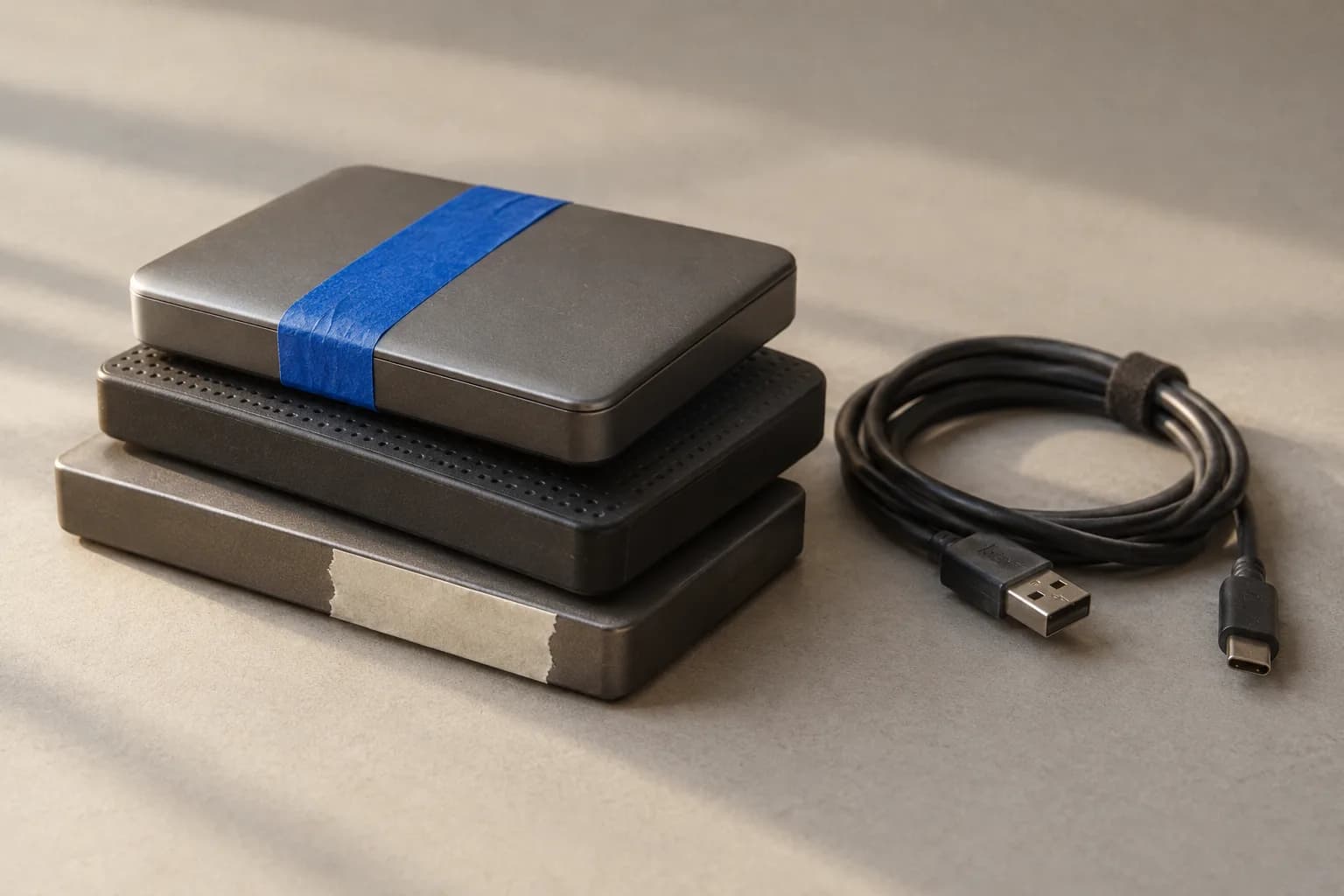
An AI video invoice is mostly human time: direction, the iterations that get thrown away, quality control against the brief, rights and licensing paperwork, music, and delivery in every ratio you need. The raw model cost is usually five to fifteen percent of the total, and on a heavily iterated job even less.
Here is the anatomy as I would write it on a call sheet.
- Direction. Turning your brief into a shot list, a look, a script, a voice choice. This is the part that decides whether the result sells anything. It is also the part the cheap quote skips.
- Iterations. A usable eight-second shot takes five to ten generations on a good day and thirty on a bad one. Hands, labels, liquid, cloth and eye lines fail at a steady rate. Someone watches every take.
- Quality control. Checking each selected take against the product, the brand colour, the claim, the ratio. Then checking the cut as a whole for continuity.
- Rights. Reading the terms of the models used, licensing the music, clearing any face or voice, and writing it down so your legal team can see it. More on that in the disclosure and rights post.
- Music and sound. Licensed or composed, mixed, with sound design on the cuts. Silence is the most common tell of a cheap AI video.
- Delivery. 9:16, 1:1, 16:9, captions, a clean version, a version with the end card, project files you can re-cut later.
Typical price ranges by job
Below are the three jobs we quote most often, with the range I would expect from a studio in 2026, what tends to be included, and how long it takes. Traditional equivalents are there for comparison, not as a dig.
| Job | What is in it | Studio AI range | Lead time | Traditional equivalent |
|---|---|---|---|---|
| UGC pack | 6–10 vertical clips, 15–30 s each, voice, captions, 2–3 hooks per clip | €2,500–€8,000 | 5–10 working days | €1,500–€6,000 with real creators |
| Product set | 5–8 short motion loops plus 20–40 stills, one look, all ratios | €3,000–€10,000 | 7–12 working days | €6,000–€20,000 shoot and edit |
| Hero spot | 30–60 s scripted, music, grade, sound design, cutdowns | €8,000–€30,000 | 3–6 weeks | €40,000–€200,000+ |
| Add-on: lip-sync talking person | Per language, per minute | €800–€3,000 | +2–4 days | Talent, studio, dubbing |
| Add-on: exact product plates | Half-day photography of the real product | €600–€1,500 | +2 days | Already in a shoot |
Two things about the table. First, the UGC row is the one where AI is not obviously cheaper, and I say so on calls. A real creator with a phone and a brief is also inexpensive. AI wins there on variants and speed, not on the price of a single clip.
Second, the hero spot range is wide because the brief range is wide. A moody product film with no people and a licensed track is near the bottom. A scripted story with two recurring characters, dialogue and three languages is near the top, and I would still not promise the top.
What makes an AI video cheaper?
An AI video gets cheaper when the brief has one product, one message and one look, when there are no close-up faces or lip-sync, when no text has to be legible in frame, and when the client decides quickly. Fewer ratios, stock music and flexibility on exact product geometry each take a line off the quote.
The single biggest saver is a decisive client. Our rounds are priced in. A job that needs two rounds costs what we quoted. A job that needs six because four stakeholders disagree costs us the difference, so we have learned to ask who approves before we quote.
The second biggest saver is reference. Three images that show us the light and the mood save a day of exploration. The brief we send clients is in how to brief an AI studio and I would read it before asking for a price.
What makes it more expensive?
An AI video gets more expensive with every element that has to be exactly true: a real person's face or voice, legible packaging, a brand colour that has to match a Pantone, a product with precise geometry, shots longer than eight seconds, and continuity of one character across many scenes. Rush, extra languages and buy-out usage rights add on top.
Talking people are the big one. A realistic person speaking to camera needs a consistent face, a voice with the right accent, lip-sync that survives a close-up, and a disclosure plan. Each of those is a day's work on its own, and together they can double a UGC pack.
Long shots are the quiet one. Most models are comfortable to about eight seconds. A fifteen-second continuous take is either two shots stitched with care or a lot of failed generations. We cut around it where the brief allows.
You are not paying for the generation. You are paying for the person who throws out the first forty takes.
Why do cheap AI quotes go wrong?
A €300 quote for a 30-second AI spot means one take per shot, no quality control, no rights paperwork, no revisions and no music licence. The price is real. The hidden cost is the week your marketing lead spends reviewing it, the uncanny tells your audience spots in two seconds, and the second studio you hire to redo it.
I have watched this happen enough times to describe the pattern. The first cut arrives fast and looks plausible at phone size. Someone notices the hands. Someone else notices the logo is a near-miss. Legal asks where the music came from and gets no answer. The brand quietly shelves it and the AI budget is gone for the quarter.
The honest version of cheap is possible. It looks like a tightly scoped product mood piece, no people, stock music, two rounds, one ratio. We quote those, and they are good value. The dishonest version of cheap is a hero spot priced like a mood piece.
How does this compare with a traditional shoot?
For a hero spot, AI production typically costs a fifth to a tenth of a traditional shoot, because there is no crew, location, talent or travel day. For stills and product loops the saving is smaller but real, and it grows with the number of settings; the line-by-line comparison is in AI product photography vs a real shoot. For a single UGC clip there is often no saving at all.
What a traditional shoot still buys you is product truth and a human face that is actually that human. If either of those is the point of the campaign, I will say so on the call and sometimes suggest a hybrid, which I have written about in AI product photography vs a real shoot.
What AI buys you is variants. Twelve settings, four languages, six hooks per clip, a re-cut next quarter without rebooking anyone. If your media plan needs that volume, the cost comparison stops being close.
What to ask for in a quote
When you get an AI video quote, ask the studio to break it into direction, rounds, rights, music and delivery, and ask what happens on round three. A quote that is one number with no rounds and no rights line is a quote for the generation only.
If the answers are clear, you are probably talking to a studio. If the answers are vague, you are probably talking to a subscription with a person attached. There is nothing wrong with that at the right price, as long as you know which one you bought. The work on the front page was made the first way.
Frequently asked
How much does a 30-second AI video cost?
From a studio, a scripted 30-second spot with voice, music and a proper grade usually lands between €8,000 and €20,000 in 2026, more if it needs a talking person with lip-sync in several languages or exact product geometry. A simple 30-second product mood piece with no people can be a third of that.
Why is AI video not nearly free if the tools cost €30 a month?
The tool cost is real but small. A finished eight-second shot often takes five to ten generations before one is usable, and someone has to write the prompts, judge the takes, fix the hands and the labels, cut, grade and deliver. That person's time is the invoice.
Is AI video cheaper than a traditional shoot?
For a hero spot, usually yes by a wide margin, because there is no crew, location or talent day. For a single UGC creator video it can be a wash, since a real creator with a phone is also cheap. The savings scale with the number of variants, settings and languages you need.
Got a product and a deadline? Fifteen minutes is usually enough to tell you whether AI is the right way to make it, and what it would cost.
Book a callor look at the work